

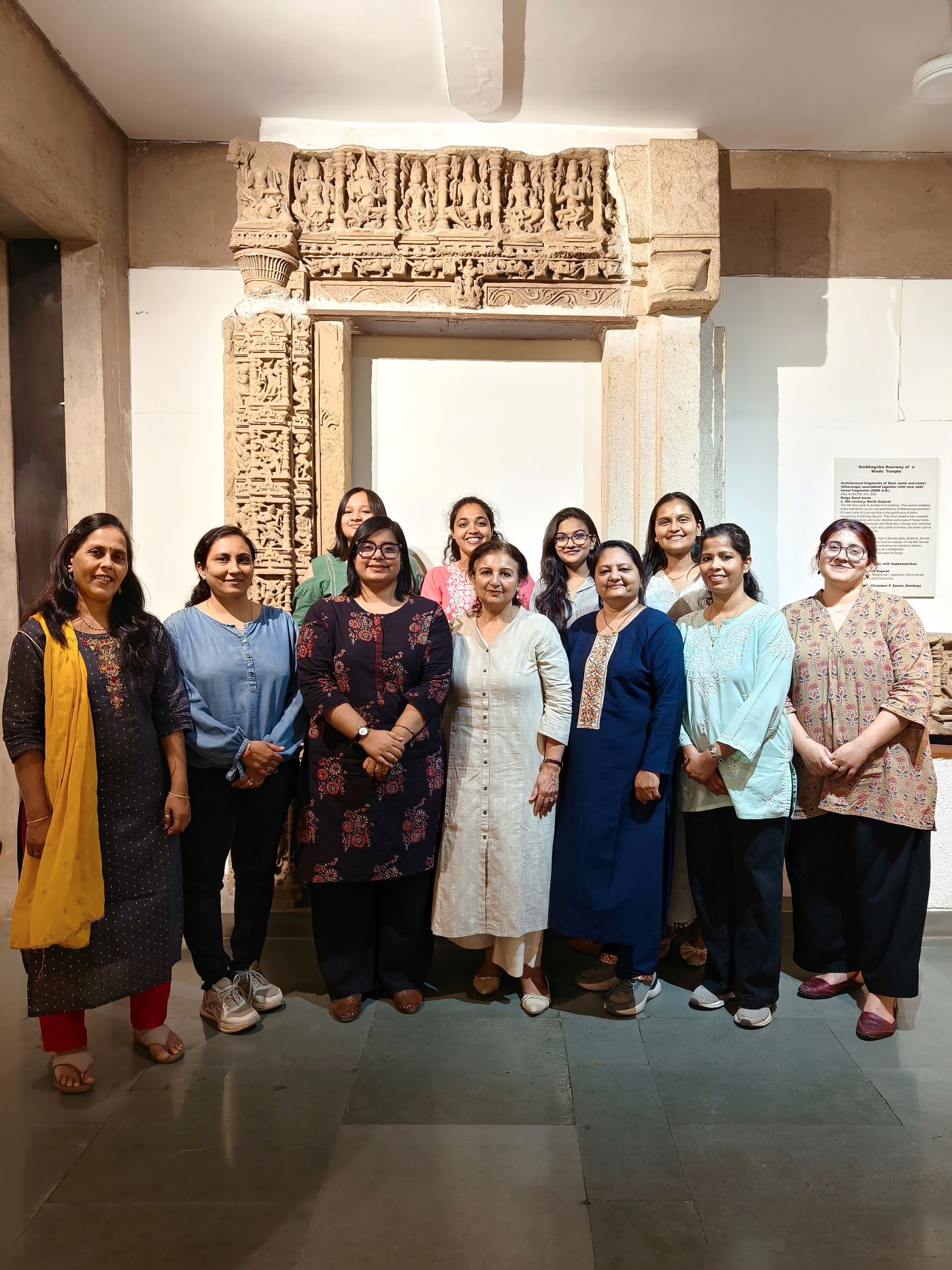
March 8, designated as International Women’s Day, is an appropriate occasion to speak about Women leadership in Museums, a traditionally male oriented domain. As more women take on leadership roles in museums, there is a definite transformation of these cultural spaces. Female leadership opens doors to persons and voices not heard before. The environment becomes collaborative, warmer, and inclusive.
Women are increasingly coming into the forefront. The Lalbhai Dalpatbhai Museum in Ahmedabad is one such unique museum, perhaps the only one in India, being led and run by women. The strength of this cultural institution is not only in its collections and spaces, but the women who contributed to it, the women who lead it, and the women who run it.
Many of its outstanding collections have been gifted by women namely Lilavati Lalbhai, Madhuri Desai, Shanta Mehta; its administrative trustees comprise of financially-astute and culturally-aware women; its Director, and its various departments -- curatorial, conservation, education, library and accounting – all comprise 90% of women.
As the woman director, I encourage my teams to take decisions and to evolve responsibly towards their work, as well as towards themselves.
Together, we have created a fresh and expanded vision of community inclusion, interdisciplinary of the arts (painting, sculpture, dance, music, theatre, literature etc. all within the museum galleries) touch and feel displays, education programs for school children, warm and welcoming spaces, and always that ‘little bit extra’ in the ‘care’ of our museum visitors, and these steer the museum towards our mission.
Behind the scenes, care of the collection is paramount, implementing best museum standards. We strive to maintain UN’s sustainable practices in the areas of museum curation, exhibition, events, and waste management.
Our mantra is to look, listen, learn, discuss, incorporate. Whether it is from the wider museum community around us, suggestions of trustees, or the younger generations with their innovation and technological skills, or the staff or museum visitors, the aim always is: ‘to care’. To care for our cultural heritage, to care for the museum collections, to care for our visitors, and to care for our planet.



Follow Us On:


Whatsapp Us On:
+91 78630 40584
Call Us On:
+91 94085 36883
Write Us On:
ldmuseum1985@gmail.com
Copyright © 2014-2026 Lalbhai Dalpatbhai Museum (sponsored by Lalbhai Dalpatbhai Bhartiya Sanskriti Vidhya Mandir). All Right Reserved.
© 2014-2026 Lalbhai Dalpatbhai Museum (sponsored by Lalbhai Dalpatbhai Bhartiya Sanskriti Vidhya Mandir).All Right Reserved.
Disclaimer:All content and images on this Website / Blog - unless stated otherwise - are copyright of The Lalbhai Dalpatbhai Museum.